
A beeping garage door opener can interrupt a quiet house and raise an immediate concern. The sound may involve backup power, the battery, or another opener function. Its exact meaning depends on the model.
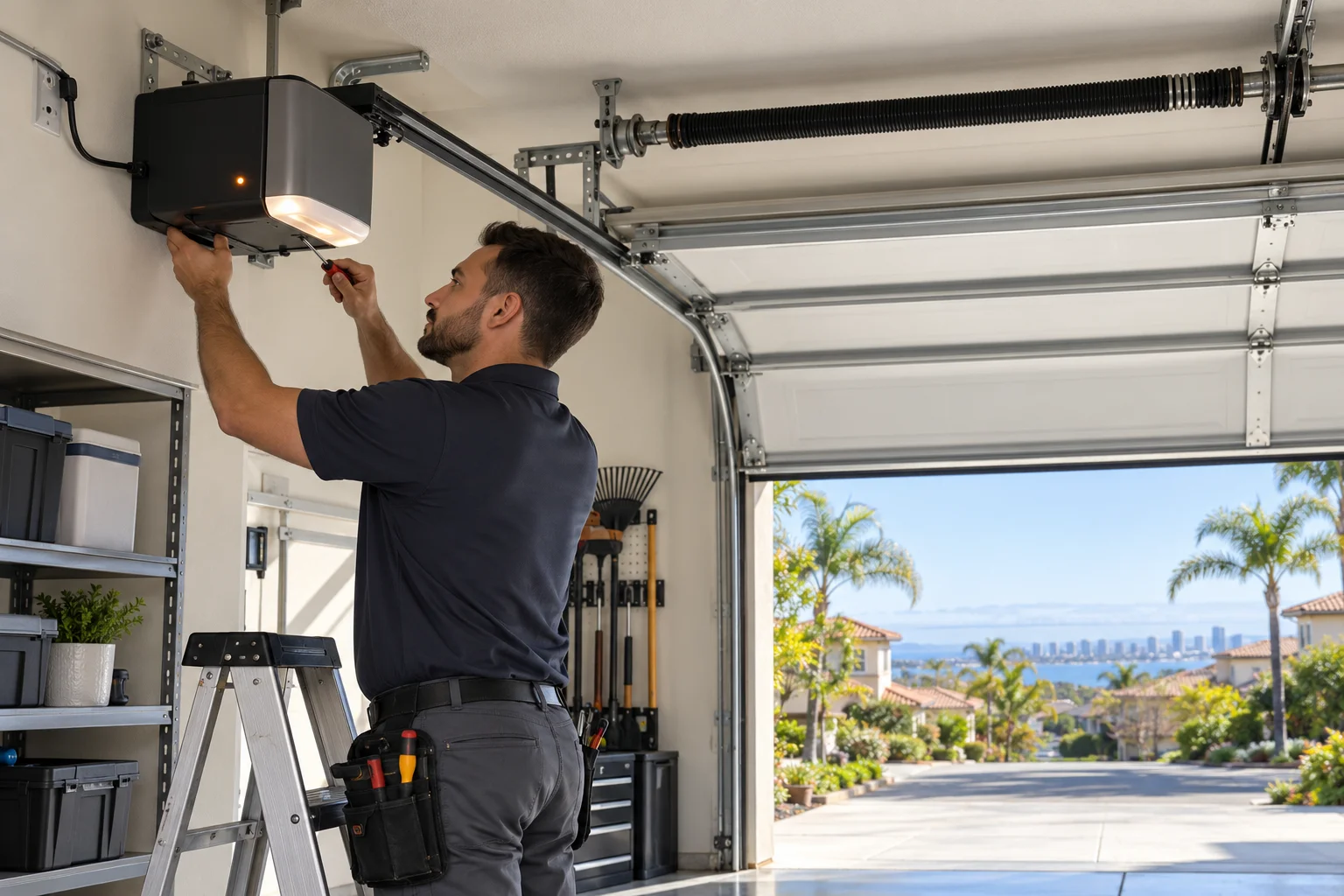
What the beeping may indicate
Garage door battery backup beeping doesn’t have one universal meaning. Alert patterns, indicator colors, and control buttons vary between opener models. A code described online may not apply to the unit in your garage.
Start by noticing the circumstances. Did the sound begin when household power changed? Is a battery indicator illuminated? Does the door still open and close normally? Write down the beep pattern and any visible words, symbols, or light colors. Those details make the model manual more useful.
A repeating alert may relate to the backup power system. It may also come from another opener feature or accessory. The approved information for this site doesn’t confirm universal beep intervals or LED meanings. Check the manual for your exact model before interpreting either one.
The manufacturer and model information may appear on a label attached to the opener. Use that information to find the correct manual through the manufacturer. Don’t rely on a manual for a similar-looking unit.
This distinction matters after an outage. The timing may suggest a power-related alert, but it doesn’t prove the battery has failed. If the opener has stopped working as well, follow our broader guide to a garage door opener not working in San Diego. It helps separate an alert from a larger operating problem without treating the beep alone as a diagnosis.
Checks homeowners can make safely
Keep your first checks visual and external. The approved sources for this site don’t establish instructions for opening the opener housing, handling internal wiring, or making an electrical repair. They also don’t confirm when a homeowner should open the battery compartment. Check the manual for your exact model or ask a qualified professional for guidance.
Look at the opener from the garage floor. Record any indicator color or message. Confirm whether other ordinary devices in the garage appear to have power. Note whether the opener’s power cord appears connected. The approved sources don’t provide handling instructions for damaged plugs, loose outlets, or exposed conductors, so consult the model manual or a qualified professional.
Next, locate the model label without climbing into an unstable position. Search the manufacturer’s support material for that exact model. The manual should explain where the backup battery sits, what the alert means, and whether the sound can be silenced. Chamberlain and other manufacturers don’t necessarily place batteries in the same location across every product.
Don’t press unfamiliar button combinations simply to stop the noise. A control may have another purpose on your model. Muting an alert also doesn’t correct its cause.
If a smart feature appears involved, check the model instructions before changing network settings. Our smart Wi-Fi garage door opener service page explains when connected controls may need professional attention. A beep from the opener, wall control, or accessory can sound similar when you’re standing elsewhere in the garage. Identify the source before replacing anything.
When a backup battery may need replacement
A backup battery becomes a reasonable suspect when the model manual connects the observed alert to battery condition. The case becomes stronger when the alert remains after normal power is available and the manual’s stated checks don’t clear it.
Don’t choose a replacement by appearance alone. Battery shape, connector style, and electrical specifications can differ. Use the opener’s exact model information and the manufacturer’s current parts guidance. The available approved sources don’t confirm a universal battery type, service life, price, or warranty.
The battery location also varies. Some models may provide a clearly identified homeowner-accessible compartment. Others may require a different procedure. Follow only the instructions written for your unit. Stop if the compartment is damaged, the connector doesn’t match the manual, or reaching it requires an unstable setup.
A replacement decision should account for the rest of the opener. If the door operates normally and the manual identifies only a battery alert, replacing the specified battery may be the focused option. If the opener also behaves inconsistently, makes unusual sounds, or ignores controls, the battery may not be the whole problem.
For a wider comparison of current opener types, read our garage door opener brands guide. Brand information can narrow your research, but the model label and official manual should guide the actual battery choice.
When the opener itself needs professional testing
Professional testing makes sense when the manual doesn’t explain the alert, the recommended checks don’t resolve it, or the opener has another operating symptom. Beeping plus unreliable movement deserves more attention than an isolated sound.
If you notice visible heat damage, a damaged power cord, an electrical odor, or an exposed component, report those details to the manufacturer or a qualified professional. The approved sources don’t confirm a universal disconnect procedure. They also don’t provide instructions for opening the motor housing or diagnosing internal electrical parts.
A licensed garage door contractor can examine the complete opener system. Ask the contractor to identify whether the alert comes from the battery, its connection, the opener controls, or another attached device. The finding should be tied to your specific model rather than a generic beep chart.
The door itself also affects the decision. Report jerky travel, failure to stop, trouble opening, or changes in sound. Don’t assume every symptom began with the battery. A contractor can test the opener while also checking how it interacts with the door.
Lift Pro SD is a referral service. We match San Diego County homeowners with independent, licensed and insured garage door contractors. Our opener installation and repair service can connect you with a pro when model-specific testing is needed. You contract with and pay the matched professional directly.
How to compare repair and replacement options
Start with the diagnosis, not the sales label. Ask what component produced the alert and what test supports that finding. A battery replacement, opener repair, and complete opener replacement solve different problems.
For a repair option, request the exact part description and compatibility with your model. Ask whether the proposed work addresses every reported symptom. If the recommendation is full replacement, ask why the existing opener isn’t a suitable repair candidate.
Compare features only after the cause is clear. Battery backup, connected controls, wall-mounted designs, and standard ceiling-mounted openers serve different preferences. Avoid paying for features you won’t use. Also avoid choosing a new unit solely because its controls look familiar.
Request written terms directly from each contractor. Lift Pro SD doesn’t set prices or provide warranties. The matched professional determines the scope, price, scheduling, and any warranty attached to the work. No verified market price for this battery or repair is available in the approved site sources, so confirm the current amount before authorizing work.
For work whose aggregate contract price reaches the California licensing threshold, verify the contractor through the CSLB license check. That lookup can show licence status, classification, bond, and workers’ compensation information. Every contractor in our network is licensed and insured, but checking the record yourself remains a sensible comparison step.
When to call us
Call when the manual doesn’t identify the alert, the beeping continues, or the opener has another operating problem. Call us at (858) 434-7895 and we’ll connect you with a licensed garage door contractor.